Engineering considerations
- Geotechnical report, groundwater and nearby structures.
- Approved design, access and working-platform requirements.
- Installation records, inspection and specified acceptance tests.

Controlled surface impacts improve suitable ground, subject to vibration and nearby-structure constraints.
Discuss your scope ↗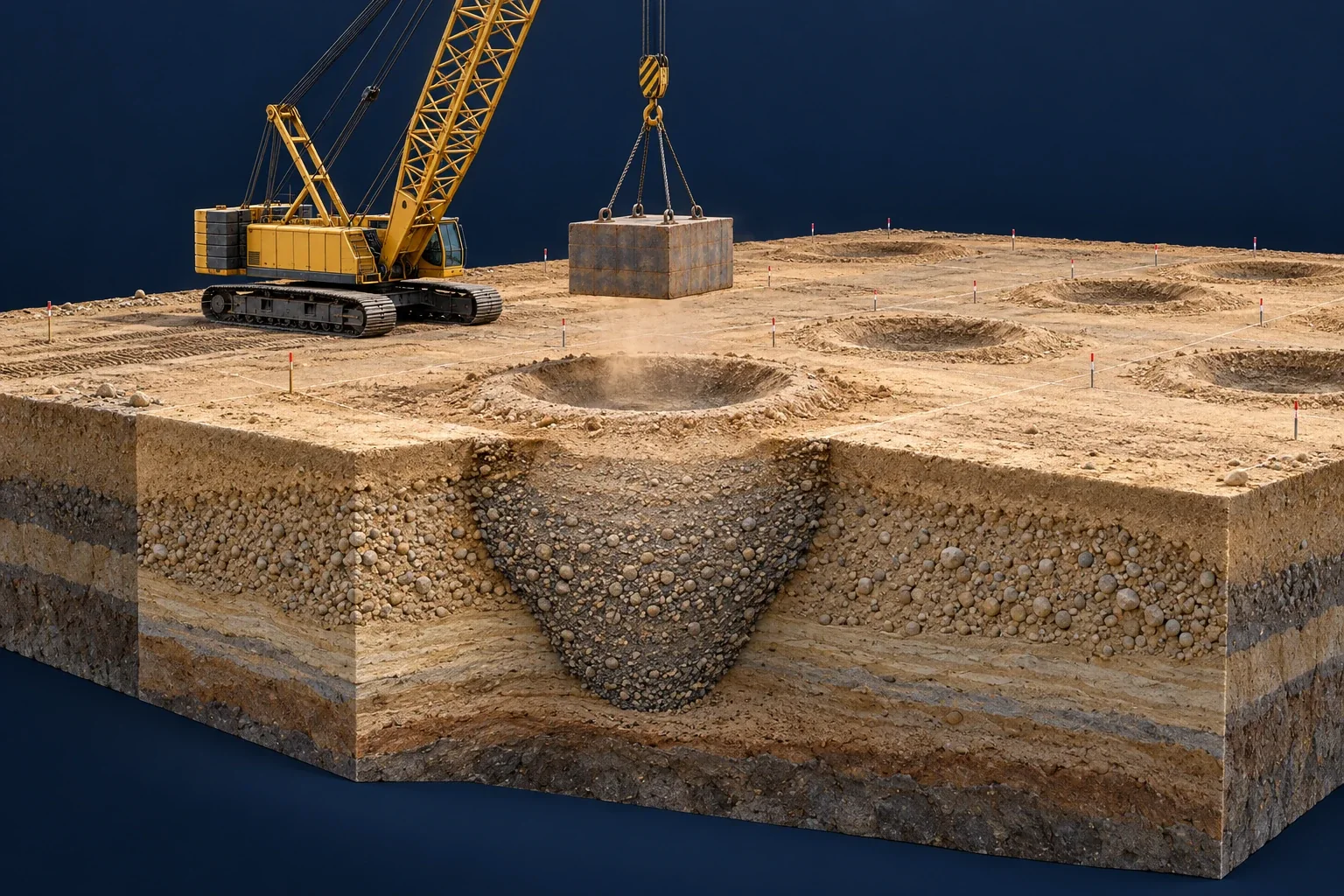
HOW IT WORKS
Define the trial, impact grid, exclusion zone and monitoring.
Apply the approved drop sequence and manage surface craters.
Verify improvement using specified field tests and monitoring records.
APPLICATION & ENGINEERING
A heavy tamper repeatedly impacts the ground to densify suitable fills and granular soils. Trials, vibration limits and nearby structures inform the treatment layout.
TECHNICAL SERVICE GUIDE
Dynamic compaction uses repeated heavy impacts to densify suitable fills and granular soils. Treatment energy and pass layout are selected through design and trials, with particular attention to vibration, buried services and nearby structures.
The ground investigation, groundwater conditions and structural requirements inform method selection. Working access, installation sequence and effects on neighbouring structures are reviewed before execution.
Record impact locations, drop height, number of drops and crater response. Monitor vibration where required and verify improvement through the specified post-treatment investigation.
FROM SITE DATA TO A TECHNICAL PROPOSAL
Share the site location, geotechnical report, structural loads or excavation requirements, drawings and target programme. These inputs allow the engineering team to assess method suitability, equipment access, installation sequence and the required verification plan.
FROM OUR PROJECT REGISTER







AUTHORITIES & FREE ZONES







Discuss your scope, site programme and mobilisation requirements directly with our team.
Request a quote →