Engineering considerations
- Geotechnical report, groundwater and nearby structures.
- Approved design, access and working-platform requirements.
- Installation records, inspection and specified acceptance tests.

A ground-improvement approach using designed inclusions, coordinated with the load-transfer arrangement and project acceptance criteria.
Discuss your scope ↗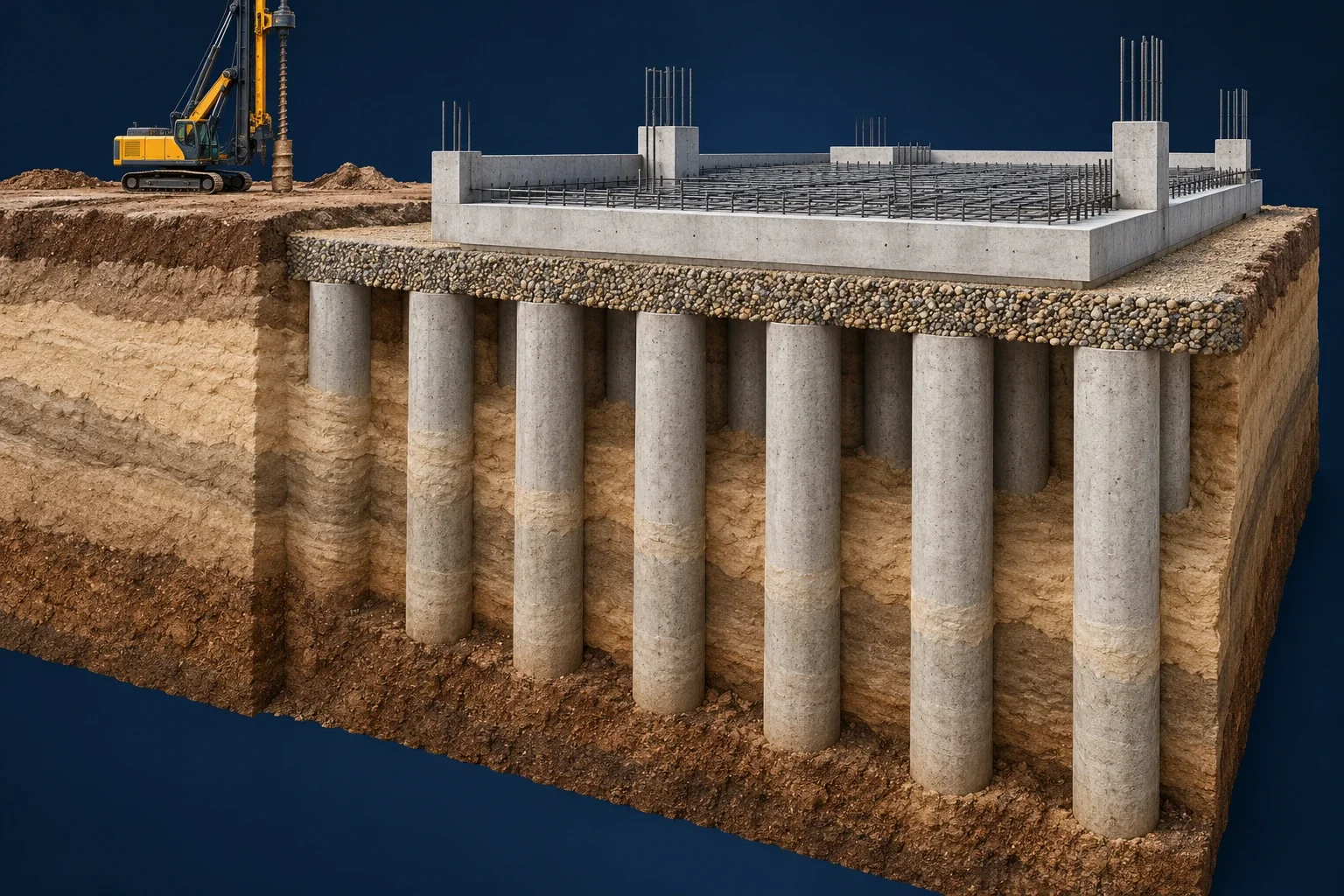
HOW IT WORKS
Review ground conditions and the approved inclusion and load-transfer design.
Install the elements using the specified equipment and controlled sequence.
Maintain installation records and undertake project-specified verification.
APPLICATION & ENGINEERING
Rigid inclusions improve composite ground performance. The load-transfer arrangement between the structure, granular platform and inclusions is part of the design.
TECHNICAL SERVICE GUIDE
Controlled modulus columns are rigid inclusions used to improve the response of a ground-foundation system. They differ from structural foundation piles: the load-transfer platform and interaction with surrounding soil are essential parts of the design.
The ground investigation, groundwater conditions and structural requirements inform method selection. Working access, installation sequence and effects on neighbouring structures are reviewed before execution.
Control location, depth, continuity and material strength, together with the load-transfer layer. Evaluate settlement and verification tests against the specified ground-improvement criteria.
FROM SITE DATA TO A TECHNICAL PROPOSAL
Share the site location, geotechnical report, structural loads or excavation requirements, drawings and target programme. These inputs allow the engineering team to assess method suitability, equipment access, installation sequence and the required verification plan.
FROM OUR PROJECT REGISTER







AUTHORITIES & FREE ZONES







Discuss your scope, site programme and mobilisation requirements directly with our team.
Request a quote →