Engineering considerations
- Geotechnical report, groundwater and nearby structures.
- Approved design, access and working-platform requirements.
- Installation records, inspection and specified acceptance tests.

Small-diameter reinforced grouted piles for restricted access or limited headroom.
Discuss your scope ↗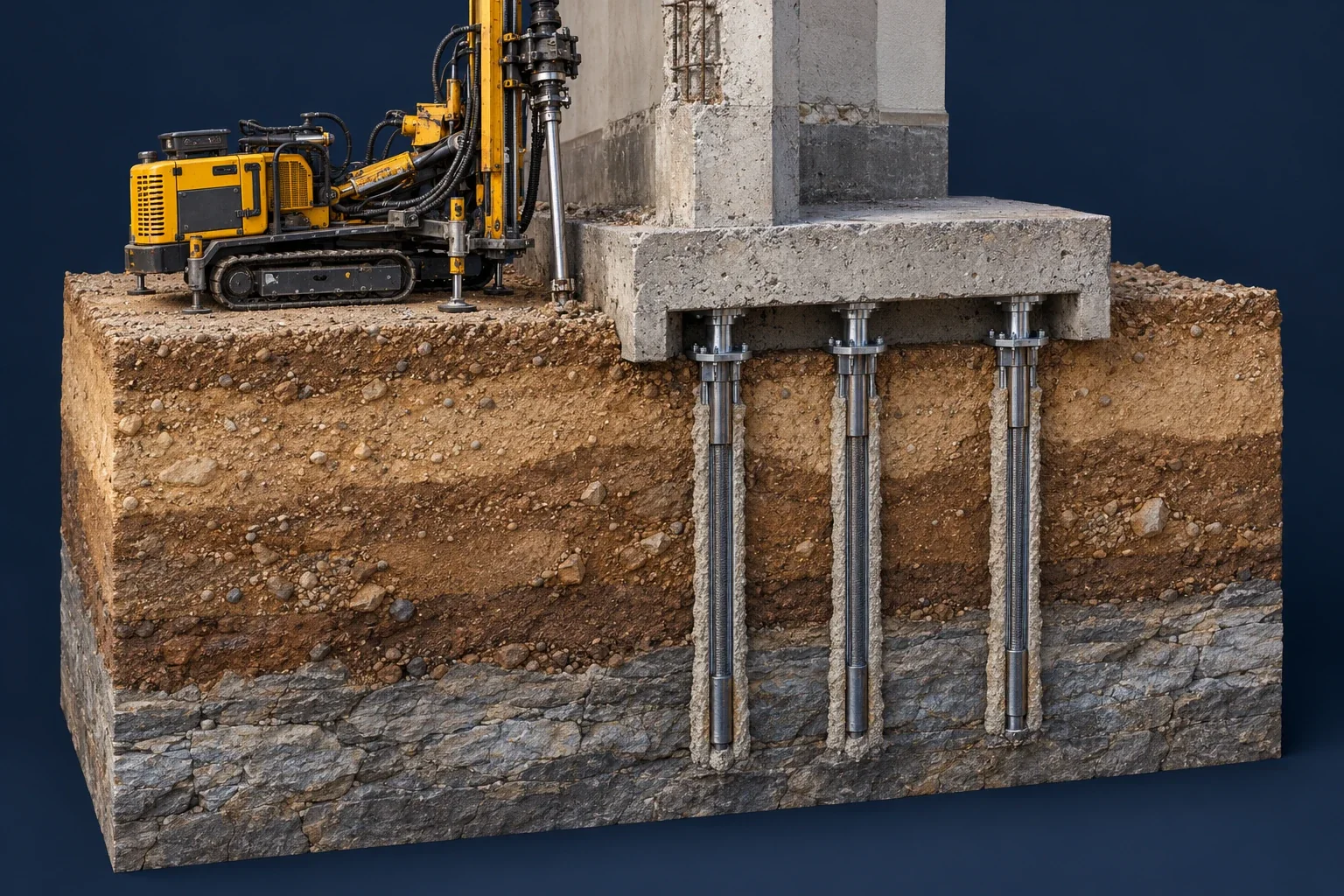
HOW IT WORKS
Select drilling and bore support for the ground and access conditions.
Install reinforcement and grout using the approved sequence.
Record pressures and volumes and perform specified verification tests.
APPLICATION & ENGINEERING
Small-diameter steel-reinforced grouted elements can transfer loads where access or headroom limits larger rigs.
TECHNICAL SERVICE GUIDE
Micropiles can support restricted-access works and underpinning where conventional rigs cannot operate. The load-transfer mechanism depends on the reinforced element, grout and ground bond, with the connection to the supported structure designed as part of the system.
The ground investigation, groundwater conditions and structural requirements inform method selection. Working access, installation sequence and effects on neighbouring structures are reviewed before execution.
Check drilling records, reinforcement and casing details, grout mix and injection records. Verify load performance through the specified test programme.
FROM SITE DATA TO A TECHNICAL PROPOSAL
Share the site location, geotechnical report, structural loads or excavation requirements, drawings and target programme. These inputs allow the engineering team to assess method suitability, equipment access, installation sequence and the required verification plan.
FROM OUR PROJECT REGISTER







AUTHORITIES & FREE ZONES







Discuss your scope, site programme and mobilisation requirements directly with our team.
Request a quote →