Engineering considerations
- Geotechnical report, groundwater and nearby structures.
- Approved design, access and working-platform requirements.
- Installation records, inspection and specified acceptance tests.

Deep wells and wellpoints manage groundwater for excavation with discharge and settlement controls.
Discuss your scope ↗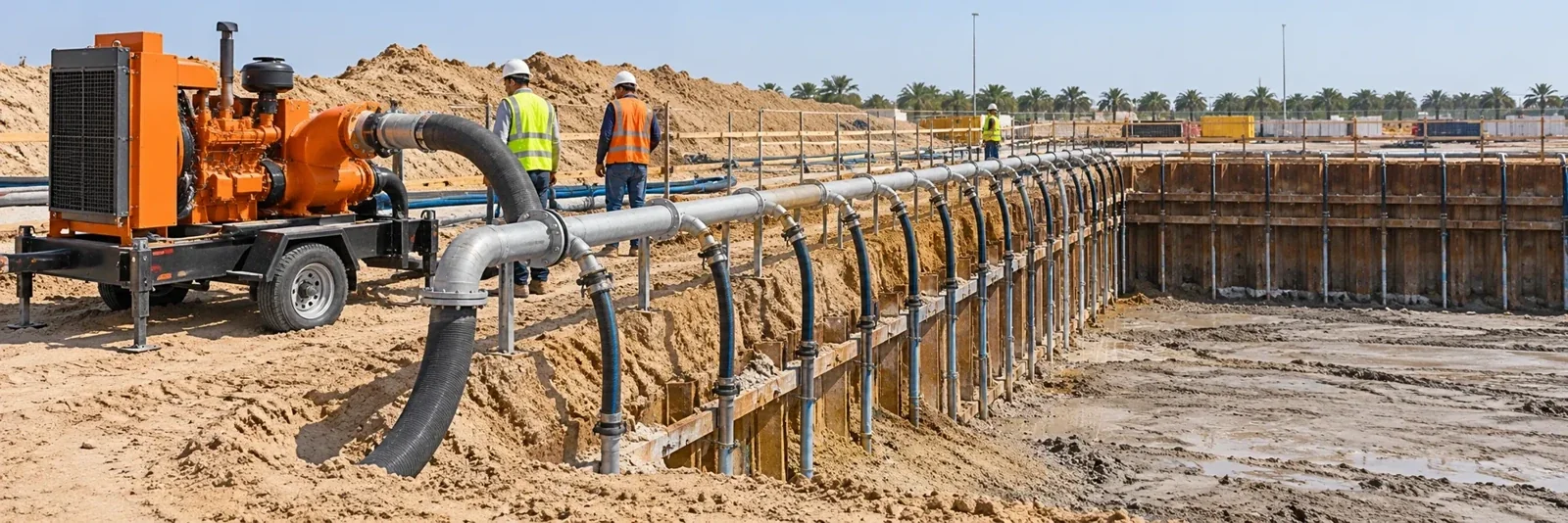
HOW IT WORKS
Review permeability, water levels, drawdown and discharge arrangements.
Install selected wells or wellpoints, pumps and standby provision.
Monitor water levels, discharge and nearby assets against the approved plan.
APPLICATION & ENGINEERING
Wellpoints, deep wells or other systems control groundwater to support excavation. Drawdown is assessed together with discharge, ground stability and settlement risks to adjacent assets.
TECHNICAL SERVICE GUIDE
Dewatering controls groundwater to allow excavation and foundation construction. The system must address soil permeability, drawdown, discharge arrangements and the potential effect of groundwater lowering on neighbouring ground and foundations.
The ground investigation, groundwater conditions and structural requirements inform method selection. Working access, installation sequence and effects on neighbouring structures are reviewed before execution.
Monitor groundwater levels, pumping rates and discharge quality as specified. Maintain the agreed standby arrangements and assess ground movement where the design identifies a risk.
FROM SITE DATA TO A TECHNICAL PROPOSAL
Share the site location, geotechnical report, structural loads or excavation requirements, drawings and target programme. These inputs allow the engineering team to assess method suitability, equipment access, installation sequence and the required verification plan.
FROM OUR PROJECT REGISTER







AUTHORITIES & FREE ZONES







Discuss your scope, site programme and mobilisation requirements directly with our team.
Request a quote →