Engineering considerations
- Geotechnical report, groundwater and nearby structures.
- Approved design, access and working-platform requirements.
- Installation records, inspection and specified acceptance tests.

Targeted injection for sealing, void filling or ground improvement using a specified grout and procedure.
Discuss your scope ↗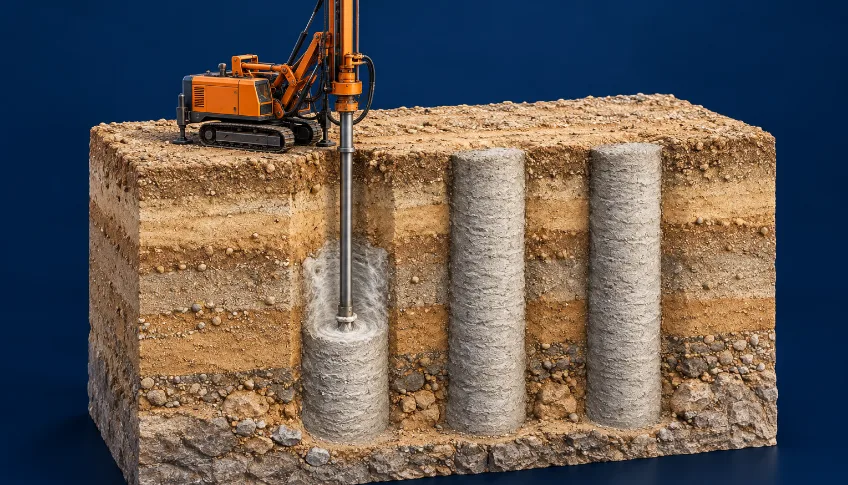
HOW IT WORKS
Define the target, grout mix, trial and monitoring plan.
Use the selected permeation, compaction or jet-grouting method with controlled pressures and volumes.
Review records and complete specified strength or permeability checks.
APPLICATION & ENGINEERING
Selected grout is introduced under controlled conditions. Soil permeability, the grouting mechanism and the treatment objective govern the mix, pressure and verification plan.
TECHNICAL SERVICE GUIDE
Grouting is selected to meet a defined treatment objective, such as reducing permeability or improving ground behaviour. Soil permeability and the injection mechanism determine the grout type and approach; one injection technique is not suitable for every ground condition. Jet grouting uses high-energy jets to erode and mix the ground with binder to form treated elements; this differs from permeation grouting, which introduces grout into accessible pores.
The ground investigation, groundwater conditions and structural requirements inform method selection. Working access, installation sequence and effects on neighbouring structures are reviewed before execution.
Record grout mix, pressure, volume and injection sequence. Verify the intended outcome using the specified permeability, strength or other performance checks.
FROM SITE DATA TO A TECHNICAL PROPOSAL
Share the site location, geotechnical report, structural loads or excavation requirements, drawings and target programme. These inputs allow the engineering team to assess method suitability, equipment access, installation sequence and the required verification plan.
FROM OUR PROJECT REGISTER







AUTHORITIES & FREE ZONES







Discuss your scope, site programme and mobilisation requirements directly with our team.
Request a quote →